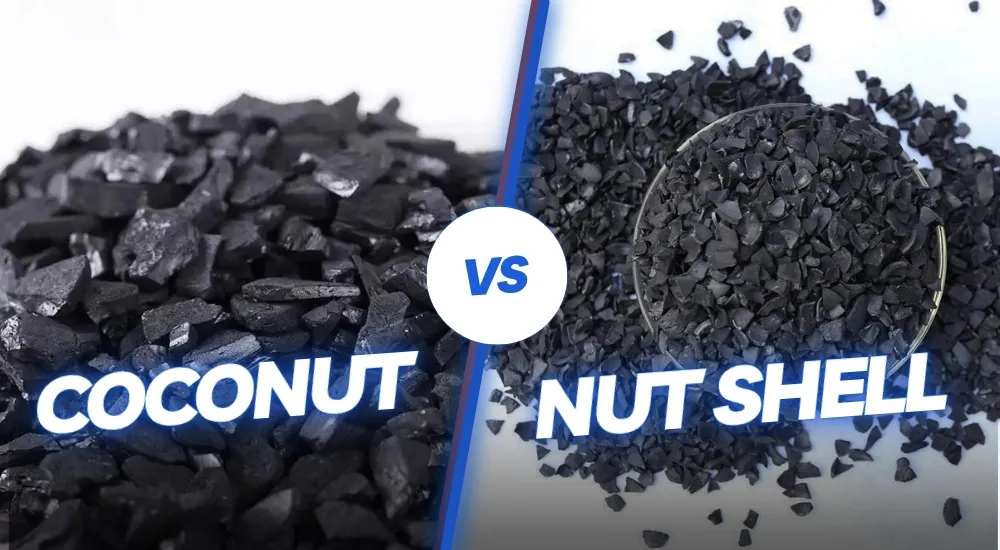





For decades, activated carbon has served as a proven adsorption medium for liquid-phase water purification. Coconut shell, coal, and wood activated carbon represent the three most common variants used in water treatment. Their raw material directly defines pore distribution: micropore coconut carbon, balanced coal-based carbon, and mesopore-rich wood carbon each excel at capturing different sizes of waterborne pollutants. Choosing blindly often leads to poor removal efficiency, shorter service life and wasted budget. This article compares these three carbon types side by side to help you make a better selection for drinking water, wastewater, decolorization and process water projects.
Activated Carbon Adsorption Principle
All activated carbon works the same fundamental way: activation creates numerous pores — hundreds to over a thousand square meters of surface per gram — and dissolved contaminants stick to that surface as water passes through. Three removal mechanisms are at play in water service:
- Physical adsorption — organics held by molecular forces in the pore network (the workhorse: VOCs, pesticides, taste & odor)
- Chemisorption — impregnated carbons that react with specific pollutants
- Catalysis — surface-modified carbon that converts contaminants like chloramine instead of merely holding them
What separates one carbon from another is which pores it has (micro, meso, macro), how hard it is, how pure it is, and what it costs per cubic meter of water treated.
Four Raw Materials Compare
Coconut shell carbon — the drinking water specialist
Made from coconut shell and activated with steam, coconut shell carbon is dominated by micropores (over 90% of pore volume) with outstanding hardness. That combination is almost tailor-made for the small, low-molecular-weight molecules that plague drinking water: chlorine, chloramines, THMs, VOCs, geosmin and MIB.
Where it wins: potable water, RO pretreatment, bottled water, POU cartridges — anywhere taste purity and media cleanliness matter. Its specs at a glance: iodine 1,000–1,200 mg/g, ash ≤3–5%, hardness ≥98%, density 0.48–0.56 g/cc. Where it doesn’t: large, heavy organic molecules (color bodies, high COD) find its narrow pores harder to enter — and the premium price is wasted on them.
Bituminous coal carbon — the versatile volume player
Steam-activated bituminous coal develops a mixed pore structure — micro, meso and macro — which is exactly what mixed-contaminant industrial water needs. Small molecules get micropores; bulky organics and color bodies get meso/macropores.
Where it wins: municipal plants with complex water chemistry, industrial wastewater, wastewater polishing, solvent-laden process water — and any project where bulk economics decide. Its specs at a glance: iodine 900–1,100 mg/g, ash ≤10%, hardness ≥95%, density 0.45–0.55 g/cc. Where it doesn’t: premium drinking water polish, where its higher ash and less intense microporosity give coconut carbon the edge.
Lignite & wood carbon — the big-molecule catchers
Lignite (brown coal) and phosphoric-acid-activated wood carbon lean toward meso- and macropores. Large molecules — tannins, dyes, humic substances, pesticides with bulky structures — fit where coconut carbon’s micropores shut them out.
Where it wins: decolorization, food & beverage process water, color and COD reduction in effluents, pesticide-heavy streams. Trade-offs: lower hardness (more fines in aggressive backwash).
Catalytic carbon — the chloramine and H₂S specialist
Catalytic carbon is not impregnated with chemicals. Instead, high-temperature gas processing modifies the carbon’s electronic surface structure so it promotes reactions: it converts chloramine to harmless chloride and nitrogen, and oxidizes hydrogen sulfide into water-soluble sulfur acids that backwash can flush out.
That last point matters operationally: catalytic carbon treating H₂S at 20–30 ppm can often be regenerated by water washing rather than media replacement — and unlike chemically impregnated carbons, there’s no caustic to worry about and no elevated bed-fire risk.
Where it wins: RO pretreatment (protecting membranes from chloramine), well water with sulfur smell, dechlorination duty where plain carbon would exhaust quickly.
Simple Parameters:
| Parameter | Coconut Shell | Bituminous Coal | Lignite / Wood | Catalytic Carbon |
| Iodine number | 1,000–1,200 mg/g | 900–1,100 mg/g | 800–1,000 mg/g | ≥900 mg/g |
| Ash content | ≤3–5% | ≤10% | ≤7–15% | ≤10% |
| Hardness | ≥95–98% | ≥90–95% | 85–92% | ≥95% |
| Bulk density | 0.48–0.56 g/cc | 0.45–0.55 g/cc | 0.35–0.45 g/cc | ~0.5 g/cc |
Frequently Asked Questions
Is coconut shell carbon always worth the premium?
For drinking water, RO pretreatment and taste-critical applications — usually yes. For high-COD wastewater or color removal, coal-based or wood carbon does the job at lower cost. Pay the premium where micropores and purity actually earn it.
Which mesh size should I order?
8×30 mesh is the all-round workhorse for pressure filters; 12×40 gives faster kinetics for compact POE/POU vessels; coarser 4×8 suits high-flow, low-pressure-drop wastewater beds. Finer media = faster adsorption but more pressure drop.
Can I mix carbon types in one bed?
Not recommended. Different densities and particle sizes stratify during backwash, creating layers that channel flow unevenly. Specify one grade per vessel.
How do I know when to change the media?
Watch effluent quality: rising chlorine residual, returning taste/odor, climbing TOC. For rigorous operations, sample the media annually — iodine number drifting toward 600 mg/g signals exhausted capacity.
What’s the difference between catalytic and impregnated carbon?
Both add chemistry beyond plain adsorption. Impregnated carbon carries deposited chemicals (silver for antimicrobial action, for example); catalytic carbon’s activity comes from surface structure modification — no chemicals to leach, lower fire risk, and often restorable by water washing.
The Bottom Line
In short, the performance difference among coconut‑shell, coal and wood activated carbon originates mainly from their unique pore‑structure profiles. Coconut carbon targets tiny molecules for high‑purity drinking‑water treatment; coal‑based carbon offers versatile performance for general‑purpose industrial water; wood‑type carbon works best for decolorization and bulky organic pollutants. Catalytic carbon solves special challenges such as chloramine and hydrogen‑sulfide removal.
Factor in hardness, ash content and total operating cost rather than just sticker price. Reach out to us for tailored carbon recommendations and sample support for your water‑treatment projects.