



Wood based activated carbon
Wood Activated Carbon Powder
Food‑grade powdered activated carbon is manufactured from sawdust and wood chips. With a mesopore‑dominant pore structure optimized for large pigment molecules, it excels at decolorization, odour reduction and organic impurity removal for food and beverage liquids. Its fine particle size shortens diffusion paths, enabling fast adsorption and consistent clarification in syrup, juice, brewing and edible oil processing.
- Meso / macropore structure
- 100 / 200 / 325 mesh
- Methylene blue 150–220 mg/g
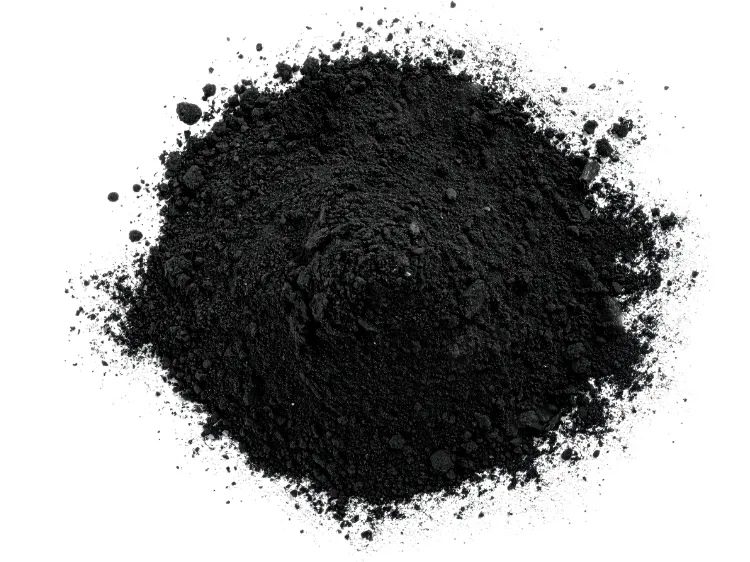
What wood activated carbon powder is
Wood activated carbon powder is produced by carbonising and activating sawdust or wood chips, then milling and classifying the result to 100–325 mesh. Because the wood precursor activates into a wide pore system, the material carries a higher share of mesopores (2–50 nm) and macropores than coal or coconut carbons — and that is the pore range dissolved colour bodies, odour compounds and larger organic molecules need to enter. It is non-toxic, free of taste and odour of its own, and used across the food, beverage, pharmaceutical, chemical and water sectors. The same family of product is also supplied in coarser and formed forms: see our powdered activated carbon and wood based ranges.
Applications of wood activated carbon powder
Liquid-phase purification is the core of it, with water and off-gas duties served by the steam-activated type.
Sugar and syrup decolorisation
Cane and beet refining, where the carbon step carries most of the colour load. See how brown syrup becomes white sugar.
Starch sweeteners and glucose
Glucose, maltose, high-fructose syrup and dextrose — colour and protein fragments removed before ion exchange and crystallisation.
Food and beverage
Juice, wine, vinegar and edible oils: colour, bitterness and off-notes come down together. See the guide to fixing colour, odour and flavour faults in wine and palm oil decolorisation.
MSG, amino acids and fermentation
Monosodium glutamate, lysine, citric and lactic acid broths, where the colour is melanoidin and needs mesopore to come out.
Pharmaceutical and intermediates
API liquors, vitamins and fermentation-derived actives, using acid-washed grades with iron ≤0.02%, heavy metals ≤0.01% as Pb and a declared zinc figure.
Chemicals and fine chemicals
Catalyst carriers, dye and pigment intermediates, and solvent or process streams where colour or by-product organics have to be taken out before the next step.
Premium Activated Carbon Manufacturer Since 2005
Quality-first activated carbon manufacturer, strict QC guarantees stable specs, fast lead time for global buyers.
21+ Years Experience
Activated carbon manufacturing since 2005.
20,000 Tons Annual Capacity
Large-scale production, stable lead times.
Serving 80+ Countries
Europe, Americas, Asia, Africa.
ISO 9001 Certified
Full quality management system.
On-site QC Laboratory
Every batch tested before shipment.
OEM / ODM Available
Custom mesh size, packaging, branding.


Typical specification
Values are given as ranges because the grade is set by the duty. Every figure is quoted with the method it was measured to, so the certificate can be checked line by line.
| Parameter | Typical range | Test method |
|---|---|---|
| Raw material | Sawdust or wood chips — pine, fir, mixed hardwood | — |
| Activation route | Phosphoric acid (standard) · steam · zinc chloride (on request) | — |
| Mesh / particle size | 100 / 200 / 325 mesh, ≥90% passing | GB/T 12496.2 · ASTM D2862 |
| Iodine number | 800–1,200 mg/g | ASTM D4607 |
| Methylene blue value | ≥150 standard · ≥200–220 premium | GB/T 12496.10 · ASTM D3860 |
| Caramel decolourisation | ≥100% (Method A) | GB/T 12496.9 |
| Molasses number | ≥150–200 | GB/T 12496 · AWWA B600 |
| Ash content | ≤3% premium · ≤5–6% standard | ASTM D2866 |
| Moisture | ≤10% dry · 45–50% as wet cake | ASTM D2867 |
| pH (10% slurry) | 3–5 acid-washed · 5–7 neutralised · 8–11 steam | ASTM D3838 |
Values vary by batch and by the grade you order. Work from the COA of the lot you are receiving, and confirm the test method behind each figure — a JIS iodine value reads roughly 50–100 mg/g higher than ASTM on the same carbon.
Questions buyers ask us
What is wood activated carbon powder used for?+
Two things, depending on the type. Phosphoric-acid activated wood powder is used to remove dissolved colour, odour and larger organics from liquids — sugar and syrup, glucose, MSG and fermentation broths, juices, wine, edible oils, pharmaceuticals and chemical streams. Steam-activated wood powder is used in water and wastewater for COD, colour and micropollutants, and injected into process and flue gases for dioxin, mercury and odour control.
Wood, coal or coconut powder — how do I choose?+
By molecule size. Colour bodies and larger organics need mesopores, which is what wood powder has most of. Coal powder sits between the two and is often chosen for water treatment on price. Coconut is micropore dominant and is the choice for small molecules, drinking water and high-purity duties. If a supplier cannot tell you the pore structure behind a quotation, the numbers on it are not comparable with anyone else's.
Which mesh type should I order?+
200 mesh covers most duties and is the safest first specification. Move to 325 mesh when the liquid is viscous or the colour target is tight; drop to 100 mesh when filtration speed is the constraint. On fines-sensitive processes, ask for a PSD clause rather than a mesh figure alone.
What comes with a shipment?+
A COA for the batch covering methylene blue, caramel decolorisation, iodine, ash, moisture, pH, iron and heavy metals, plus MSDS, packing list and certificate of origin. A sealed retained sample stays with us for the contract term, so any dispute about a lot can be settled by re-testing it.
What about samples, minimum quantity and lead time?+
Samples of 1–2 kg go out free of charge for your own bench trial; you cover the courier. Trial quantities start at one 25 kg bag. Standard grades ship in 7–10 days; a made-to-order type, mesh, methylene blue value or pH takes 15–30 days. Packaging is 25 kg bags or 400 kg jumbo bags, and both dry and wet-cake forms can be supplied. Confirm current terms when you enquire.
Get Good Quality Granular Activated Carbon
We specialize in providing high-quality activated carbon to customers worldwide. Contact us today for a free sample and customized quotation.