Introduction
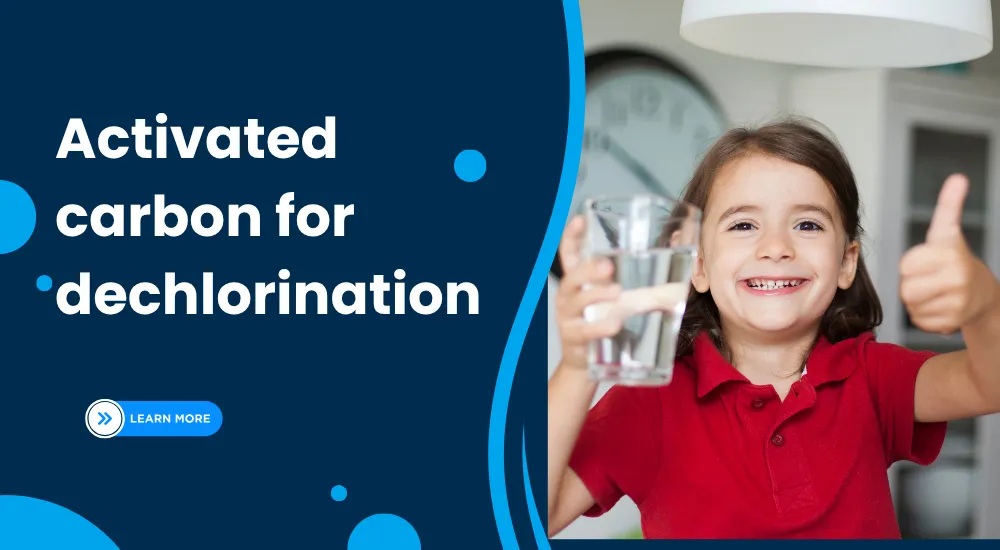
If you’ve ever turned on a tap and smelled a faint scent of a swimming pool, you’ve encountered chlorine. While municipalities add chlorine to water as a vital disinfectant to kill pathogens, its presence at the point of use is often undesirable. Whether you are a homeowner wanting better-tasting water or a plant manager protecting sensitive equipment, activated carbon for dechlorination is the industry-standard solution.
In this guide, we will explain how activated carbon removes chlorine, which types of carbon work best, what technical parameters to look for, and how to select the right product for your application.
Why is Dechlorination Necessary?
Before choosing a dechlorination solution, it is important to understand why chlorine must be removed in the first place. Common reasons include:
Protecting Reverse Osmosis (RO) Membranes
This is the most common industrial driver. Polyamide thin-film composite RO membranes are extremely sensitive to chlorine—even low concentrations (as little as 0.1 ppm) can oxidize and permanently damage the membrane. Membrane manufacturers typically require feed water chlorine levels below 0.05–0.1 ppm. Activated carbon beds are the standard pretreatment step before RO systems.
Food and Beverage Quality
Chlorine and its byproducts (such as chlorophenols) can cause off-tastes and odors in beverages, brewing, and food processing. Bottling plants, breweries, and soft drink manufacturers almost universally dechlorinate their process water.
Pharmaceutical and Electronics Industries
High-purity water systems (PW, WFI, UPW) require chlorine-free feed water to protect downstream ion exchange resins, RO membranes, and EDI modules from oxidative damage.
Protecting Ion Exchange Resins
Chlorine degrades the polymer structure of ion exchange resins, shortening their service life. Dechlorination upstream extends resin life significantly.
Other Applications
• Aquariums and aquaculture – chlorine is toxic to fish and aquatic life
• Dialysis water treatment – strict limits on chloramine and chlorine
• Swimming pool water recirculation
• Drinking water point-of-use (POU) filters – improving taste and odor
How Activated Carbon Removes Chlorine
Chlorine removal by activated carbon is primarily a catalytic chemical reaction on the carbon surface, rather than physical adsorption. Free chlorine (hypochlorous acid, HOCl, or hypochlorite ion, OCl⁻) reacts with the carbon surface:
HOCl+C∗→C∗O+H++Cl−
OCl−+C∗→C∗O+Cl−
Where C* represents the carbon surface and C*O represents a surface oxide. Chlorine is reduced to harmless chloride ions (Cl⁻), which remain dissolved in the water and are easily removed downstream or simply pass through harmlessly.
Which Type of Activated Carbon Is Best for Dechlorination?
Coconut shell activated carbon is widely regarded as the highest quality media for water purification, especially for dechlorination in drinking water and food production.
High Microporosity: Since chlorine molecules are small, these micropores provide the perfect environment for the chemical reduction to occur rapidly.
Superior Purity: Unlike coal-based carbon, coconut shells are low in ash and heavy metals. This ensures that while you are removing chlorine, you aren’t leaching impurities back into the water.
High Hardness: Coconut shells are incredibly tough. This means the carbon granules don’t break down easily into “fines” (dust), keeping your filters clean and reducing the risk of clogging downstream equipment like Reverse Osmosis (RO) membranes.
Renewable & Eco-Friendly: As a byproduct of the food industry, coconut shells are a sustainable resource.
Best for: Residential drinking water filters, RO pre-treatment, beverage production, and high-purity laboratory water.
| Parameter | Unit | Standard Value / Range | Test Method |
|---|---|---|---|
| Iodine Number | mg/g | 950 – 1100 (Min) | ASTM D4607 |
| Apparent Density | g/cm³ | 0.48 – 0.55 | ASTM D2854 |
| Hardness Number | % | 98 (Min) | ASTM D3802 |
| Ash Content | % | 3 – 5 (Max) | ASTM D2866 |
| Moisture (As Packed) | % | 5 (Max) | ASTM D2867 |
| pH Value | – | 9 – 11 (Natural) or 7 (Neutralized) | ASTM D3838 |
| CTC (Carbon Tetrachloride) | % | 50 – 60 (Min) | ASTM D3467 |
| Surface Area (BET) | m²/g | 1000 – 1150 | BET Method |
| Standard Mesh Size | Mesh | 8×30, 12×40, or 20×50 | ASTM D2862 |
| Dechlorination Half-Value Length | cm | 2.5 – 3.5 (Max) | DIN 19603 |
Conclusion
Activated carbon dechlorination is a proven, chemical-free, and cost-effective technology for protecting RO membranes, improving product water quality, and safeguarding downstream equipment.
For most applications, high-hardness coconut shell GAC (8×30 or 12×40 mesh) delivers the best balance of performance and cost.
We supply premium coconut shell and catalytic activated carbons specifically engineered for dechlorination, with complete test reports, and free technical support for system sizing. Contact us today for samples and a customized dechlorination solution.