Introduction
In processes involving food, pharmaceuticals, chemicals, sugar refining, plant extracts, edible oils, and industrial wastewater treatment, color not only affects a product’s appearance but can also indicate the presence of pigments, organic impurities, oxidation products, or other contaminants.
When raw materials or intermediate products are excessively dark in color, traditional filtration methods often fail to resolve the issue effectively, as many color-causing substances are actually organic molecules dissolved in the liquid rather than simple suspended particles.
This is why activated carbon is widely used for decolorization.
What Is Activated Carbon for Decolorization?
Activated carbon possesses a highly developed pore structure and a large internal surface area, enabling it to remove certain pigments, chromogens, and other organic impurities from the liquid phase through adsorption. Therefore, activated carbon is not merely a simple “filtration material,” but rather an adsorbent material used for liquid purification and decolorization.
Upon activation, activated carbon develops a vast network of micropores, mesopores, and some macropores, resulting in a large specific surface area and abundant adsorption sites. When a liquid containing pigments comes into contact with the activated carbon, some pigment molecules migrate from the liquid phase to the carbon’s surface and into its pores.
It is important to note here that “decolorization” does not necessarily mean the activated carbon “decomposes” the pigments. In many liquid-phase decolorization processes, the primary mechanism is actually adsorption rather than destruction; that is, the pigments are adsorbed by the activated carbon and separated from the liquid, rather than being completely chemically decomposed by it.
Currently, activated carbon decolorization is applied in:
• Sugar refining
• Edible oil refining
• Pharmaceutical processing
• Food and beverage processing
• Citric acid production
• Glucose and starch syrup purification
• Glycerin purification
• Plant extracts
• Organic chemical purification
• Industrial wastewater treatment
Pigment composition, liquid properties, and operating conditions vary significantly across these applications; therefore, the key to effective decolorization is not simply selecting “high-iodine-value activated carbon,” but rather choosing an activated carbon that matches the specific target contaminants and process conditions. That is :Colored liquid → Contact with activated carbon → Adsorption of color bodies → Separation of carbon → Clearer liquid.
What Can Activated Carbon Remove During Decolorization?
Activated carbon is not a universal chemical designed to target a single specific pigment. Depending on the industrial system, it may be used to remove:
• Natural pigments
• Carotenoids
• Chlorophyll-related color
• Polyphenols
• Tannins
• Organic color bodies
• Oxidation products
• Certain aromatic organic compounds
• Trace organic impurities
• Odor-causing organic compounds
For example, chlorophyll and carotenoids in edible oils are common sources of natural pigments, and activated carbon can facilitate the adsorption and removal of these pigments and related organic impurities.
Major Applications of Activated Carbon for Decolorization
Sugar Decolorization
Sugar refining is one of the most typical industrial applications of activated carbon decolorization. Sugar liquor derived from processed sugarcane or sugar beets may contain:
• Caramel compounds
• Phenolic compounds
• Melanoidins
• Organic color bodies
• Other high-molecular-weight impurities
These substances affect the color of the sugar liquor and the whiteness of the final sugar product. Consequently, activated carbon serves as an adsorption medium during the sugar liquor purification process to help reduce color. Powdered activated carbon (PAC)—particularly wood-based activated carbon with a suitable pore structure—is a common form used for sugar liquor decolorization.
Edible Oil Decolorization
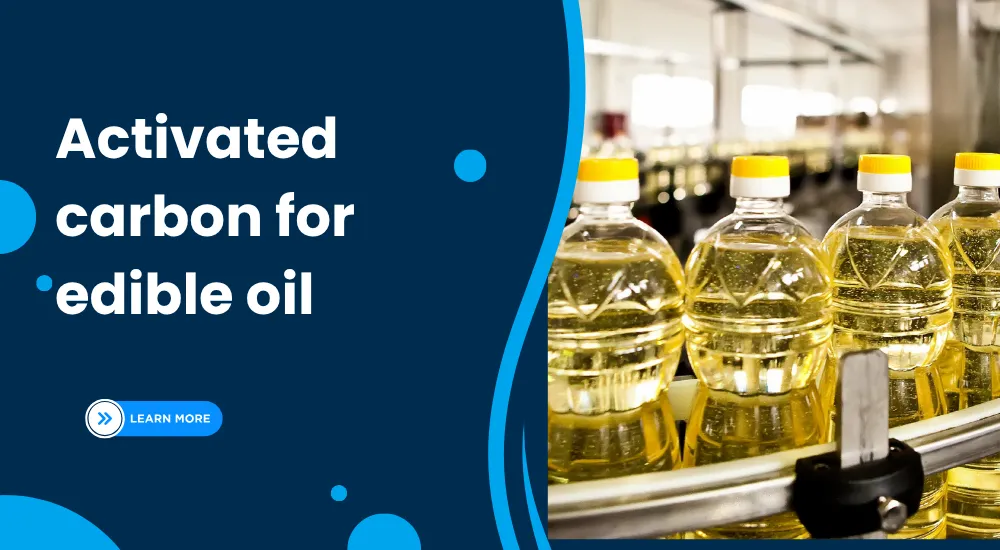
Edible oil processing represents another significant application for activated carbon decolorization. Vegetable oils that have not undergone thorough refining typically contain natural pigments and trace organic impurities, such as:
• Chlorophyll
• Carotenoids
• Oxidation products
• Trace metals
• Residual organic impurities
These substances can impart a dark color to oils such as soybean oil, rapeseed oil, rice bran oil, and palm oil. In edible oil refining, activated carbon is often used in conjunction with other adsorbents, such as bleaching earth. Activated carbon is particularly effective at removing certain organic pigments and trace organic contaminants that are otherwise difficult to eliminate.
Pharmaceutical Decolorization
In pharmaceutical manufacturing, color control is often more stringent than in general industrial applications. Certain APIs, intermediates, and pharmaceutical solutions may generate the following during synthesis:
• Colored impurities
• Oxidation products
• Polymerized impurities
• Reaction by-products
Consequently, activated carbon is frequently used for purification and decolorization. For instance, powdered activated carbon is employed for decolorization and refining during the production of acetaminophen (paracetamol).
Food and Beverage Decolorization
Many liquid products in the food industry also require decolorization. Typical applications include:
Glucose syrup
Starch syrup
Citric acid
Gelatin
Vinegar
Fruit-derived extracts
Plant extracts
Food additives
The color in these products may originate from natural plant pigments, thermal reaction products, oxidation products, and colored organic compounds formed during production. Food-grade activated carbon can reduce the concentration of these pigments and organic impurities through adsorption.
Wastewater Decolorization
In addition to product purification, activated carbon is also used for the decolorization of industrial wastewater. Typical sectors include:
• Textile wastewater
• Dye wastewater
• Chemical wastewater
• Pharmaceutical wastewater
• Food-processing wastewater
• Industrial organic wastewater
For wastewater containing dyes and complex organic compounds, activated carbon can reduce the concentration of dissolved color compounds through adsorption. Research indicates that factors such as the type of activated carbon, particle size, dosage, temperature, and contact time influence the decolorization efficiency. In practical wastewater treatment, activated carbon can also be combined with other technologies—for example: Coagulation → Filtration → Ozone → GAC; or Pretreatment → GAC adsorption → Polishing.
Studies have investigated combined processes involving ozone oxidation and granular activated carbon (GAC) adsorption to simultaneously reduce refractory organic matter and color in wastewater. Consequently, for high-concentration, complex industrial wastewater, activated carbon is generally best suited as a component of a comprehensive treatment train rather than being relied upon to handle the entire pollutant removal task alone.
What Type of Activated Carbon Is Best for Decolorization?
No single type of activated carbon is suitable for all decolorization applications. Due to differences in raw material sources, activation methods, and pore structures, various types of activated carbon exhibit differing performance characteristics when adsorbing pigments of varying molecular sizes and properties. Therefore, when selecting activated carbon for decolorization, one should not focus solely on iodine number or specific surface area; instead, it is essential to comprehensively consider factors such as the molecular size of the target pigments, the properties of the liquid, the processing method, and downstream filtration requirements.
Wood-Based Activated Carbon
Wood-based activated carbon is a widely used type of activated carbon for liquid-phase decolorization, particularly suitable for applications requiring the removal of large organic molecules and complex chromophores. Because wood-based raw materials typically develop a well-formed mesoporous and macroporous structure upon proper activation, they provide accessible channels that facilitate the entry and diffusion of large organic color molecules. This developed mesoporous structure enhances adsorption and mass transfer processes, especially when dealing with high-molecular-weight chromophores found in sugar solutions, plant extracts, and certain food and pharmaceutical products.
Coal-Based Activated Carbon
Coal-based activated carbon is another widely used type of activated carbon, commonly employed in chemical purification, wastewater treatment, and liquid-phase adsorption. For systems requiring continuous operation or fixed-bed configurations, the mechanical strength of granular coal-based activated carbon offers a significant advantage. High mechanical strength helps minimize the risk of generating carbon fines during prolonged hydraulic operation while also facilitating the maintenance of stable bed permeability.
Conclusion
Activated carbon is a core and efficient decolorizing agent widely applied in the purification and refining of various oils and industrial liquids. Adopting high-quality specially formulated decolorization activated carbon can thoroughly adsorb pigment impurities, chromatic substances and residual trace contaminants in raw materials, efficiently eliminate undesirable color tones, and deliver clear, bright and uniform finished products. Proper selection of activated carbon for decolorization not only optimizes product appearance and market competitiveness, but also maintains the original flavor, texture and chemical stability of materials, avoiding quality deterioration caused by excessive impurity residues.
If you are seeking reliable activated carbon decolorization solutions to achieve high-efficiency color removal, reduce production costs and stabilize continuous production quality, feel free to reach out to our professional technical team for tailored decolorization and purification solutions that fit your production scenarios and process requirements.