





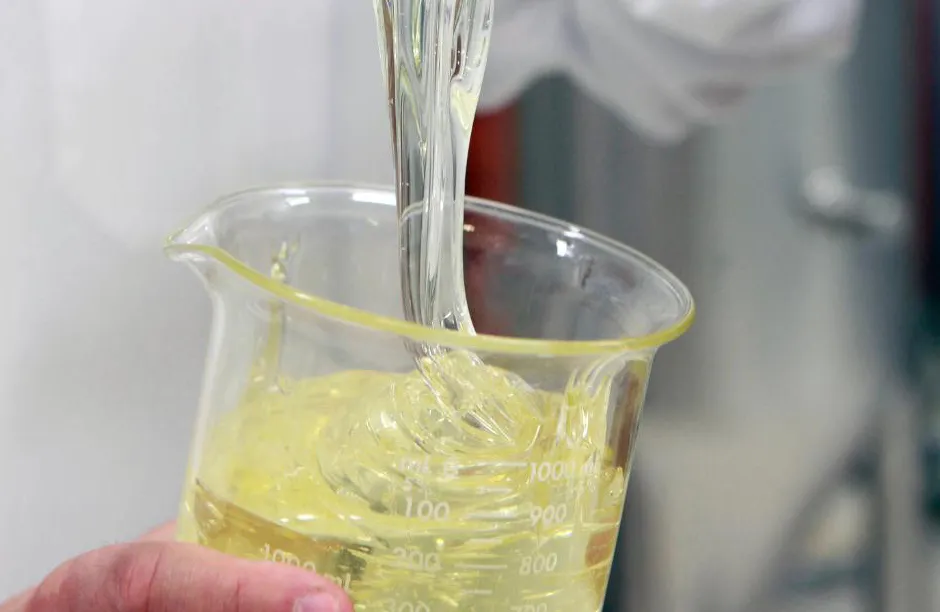
Produced from starch via liquefaction and saccharification, malt syrup is widely used in confectionery, baked goods, drinks and industrial fermentation. Raw materials, enzyme treatment, heating and concentration govern its color, clarity and quality. Crude maltose syrup is typically pale yellow to yellow‑brown. It holds colloids, pigment precursors, organic impurities and off‑flavor substances that harm appearance and strain later filtration and ion exchange.
Activated carbon is a practical adsorbent for maltose syrup decolorization. Proper grade selection, dosage and contact conditions help remove pigments, raise clarity and keep batch quality consistent. Activated carbon adsorbs selective organics and pigments only. It does not replace a complete refining system; outcomes depend on syrup composition, carbon specs and process layout.
What Impurities Can Activated Carbon Remove from Maltose Syrup?
Maltose syrup contains different types of impurities, and not all of them respond to activated carbon treatment in the same way. Molecular size, polarity, chemical structure, and the properties of the carbon all influence adsorption performance.

Colorants and Color-Forming Compounds
The color of maltose syrup may result from raw material impurities, processing conditions, and chemical reactions during heating or saccharification. Some of these colored compounds can be adsorbed by activated carbon, helping reduce syrup color and improve its visual appearance.
The effectiveness of treatment depends on the composition of the colorants and the pore structure and surface chemistry of the selected carbon.
Odor-Producing Compounds and Organic Impurities
Certain organic compounds may contribute to undesirable odors or affect the sensory properties of maltose syrup. Activated carbon can adsorb some of these substances when their molecular characteristics are compatible with the carbon’s adsorption properties.
However, the removal of odor compounds should be verified through actual application testing rather than assumed from color reduction alone.
Hydroxymethylfurfural (HMF) and Related Compounds
Hydroxymethylfurfural, commonly known as HMF, can form during the processing of sugars under certain thermal and acidic conditions. Some activated carbons may adsorb a portion of HMF and related compounds, but the removal efficiency varies with the carbon grade, syrup composition, temperature, and other operating conditions.
If HMF is a critical quality parameter, its concentration should be measured before and after treatment.
Colloidal and Other Organic Materials
Certain colloidal substances, larger organic molecules, and residual protein-related compounds may also be affected by activated carbon treatment. Their removal depends on molecular characteristics, pore accessibility, and the interactions between the impurities and the carbon surface.
It is important to distinguish between decolorization and complete purification. Activated carbon is not designed to remove every type of impurity. Inorganic salts, dissolved ions, suspended solids, and other contaminants may require filtration, ion exchange, membrane separation, or additional treatment methods.
Which Activated Carbon Is Best for Maltose Syrup Decolorization?
For many batch-based maltose syrup decolorization processes, food-processing-suitable powdered activated carbon (PAC) is a practical starting point for product evaluation.
Granular activated carbon (GAC) may also be appropriate for certain continuous purification systems or fixed-bed adsorption applications. The best choice depends on the existing equipment, syrup viscosity, required color reduction, and operating conditions.
Powdered Activated Carbon (PAC)

Powdered activated carbon is commonly evaluated for batch decolorization because it can be dispersed directly into maltose syrup and removed afterward through filtration.
Its relatively small particle size can support efficient contact with dissolved impurities. PAC also offers operational flexibility because manufacturers can adjust the dosage and contact conditions according to the characteristics of the syrup.
Important selection criteria include:
- Decolorization performance against the target colorants.
- Pore structure and relevant adsorption indicators.
- Particle size distribution and filtration behavior.
- Ash content, moisture, and water-soluble impurities.
- Potential residual carbon particles in the filtrate.
- Suitability for the intended food-processing application.
For manufacturers using batch mixing tanks and conventional filtration equipment, PAC is often a suitable option to evaluate first.
Charbon actif granulaire (GAC)
Granular activated carbon is generally used in fixed-bed or continuous-flow adsorption systems. The syrup passes through a packed carbon bed, allowing certain organic impurities to be adsorbed as the liquid moves through the column.
Compared with PAC, GAC can be more convenient for systems designed to retain carbon particles within a fixed bed. However, its performance depends on particle size, bed depth, flow rate, contact time, syrup viscosity, and the distribution of liquid through the bed.
High-viscosity syrups require particular attention because they may create excessive pressure drop, uneven flow, or bed blockage.
Regeneration should not be assumed to be suitable for every GAC application. Any regeneration process must be evaluated for adsorption performance, sanitation, contamination risks, and compliance with the requirements of the intended food-processing application.
For traditional batch-based maltose syrup decolorization, PAC is generally a logical starting point. For continuous systems, GAC may be worth evaluating when the equipment and process conditions support effective fixed-bed operation.
The final selection should be based on application testing rather than the assumption that one physical form is universally superior.
Conclusion
In maltose syrup production, refining and downstream beverage application, activated carbon serves a critical function in syrup purification. It removes dissolved organic impurities — including caramel and Maillard color bodies, residual proteins, haze-forming polysaccharides, trace hydroxymethylfurfural and off-flavor organics — from the syrup stream, effectively improving clarity and color, stabilizing taste and shelf-life, and mitigating common quality issues such as darkening, haze and flavor drift triggered by organic contaminants.
If you are looking for activated carbon solutions for maltose syrup decolorization and purification in your food processing line, please contact our technical experts to develop a customized, cost-effective filtration solution tailored to your syrup load and final spec.